Dead by Daylight: From Gaming Fog to Silver Screen Dreams
 By Axel Hansson
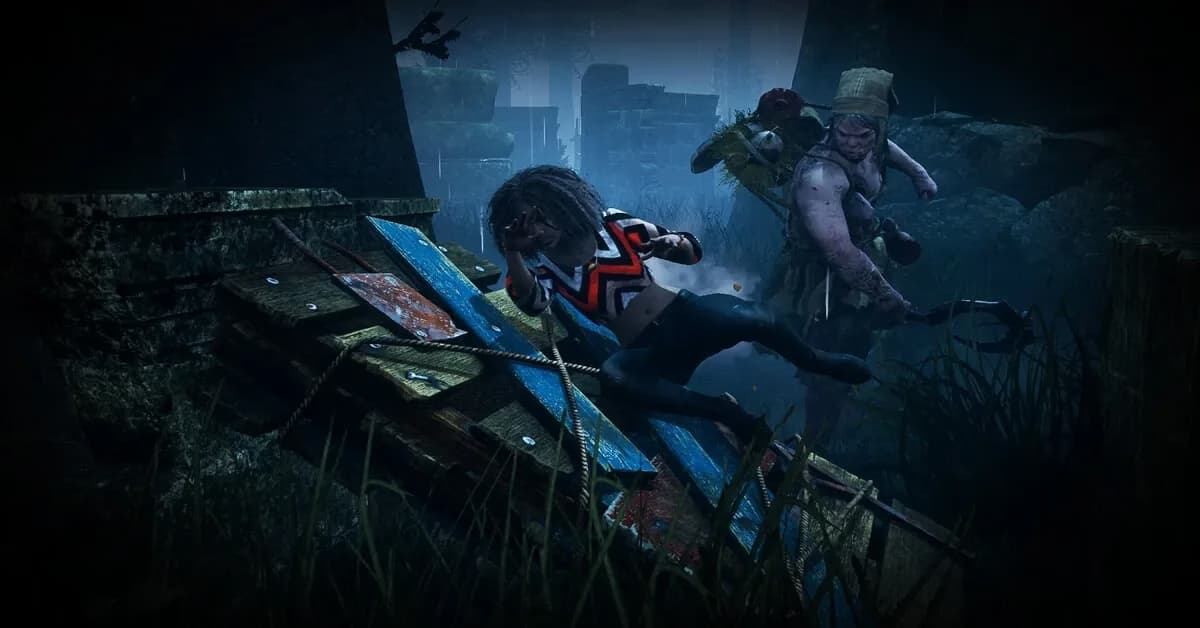
In the shadowed corners of gaming history, where pixelated nightmares dance with cultural phenomenon, a peculiar migration unfolds. For years, players have trembled before their screens, caught in the Entity's eternal embrace, but now that very terror seeks a new vessel—the cinema itself. What happens when the fog that has claimed countless digital souls drifts beyond the monitor's edge?
The Unholy Alliance: When Horror Masters Converge
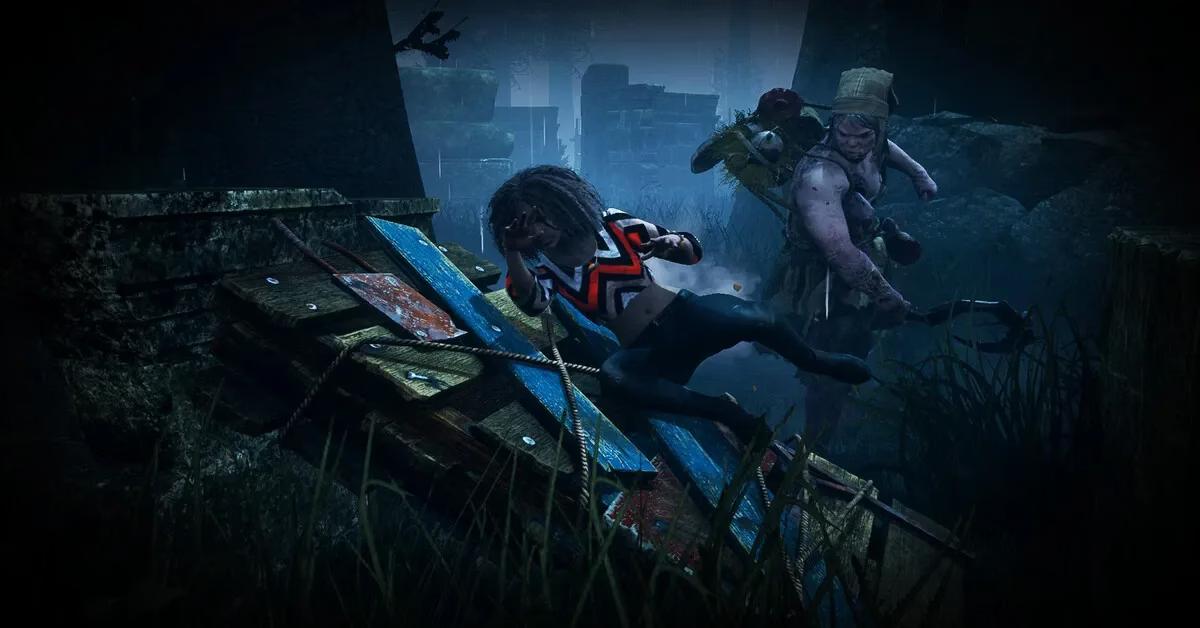
Behaviour Interactive's asymmetrical masterpiece has found unlikely shepherds for its cinematic journey. Blumhouse and Atomic Monster, those twin titans of modern terror, have clasped hands over this ambitious adaptation. The announcement ripples through the horror community like a disturbance in the Entity's web—David Leslie Johnston-McGoldrick, whose pen conjured the spectral verse of The Conjuring, now turns his attention to this new nightmare. Beside him stands Alexandre Aja, the architect of Crawl and the reimagined The Hills Have Eyes, two minds steeped in visceral dread.
Could there be more fitting guides through this dimensional crossing? These are not mere horror tourists, but seasoned explorers of humanity's darkest recesses.
Beyond the Generator Rush: Excavating the Soul Beneath the Survival
Here lies the adaptation's greatest challenge and most profound opportunity. The temptation beckons—to reduce Dead by Daylight to its mechanical components, four survivors racing against time, repairing generators in some anonymous woodland purgatory. But would such a surface-level translation capture what makes countless players return to the Entity's realm night after night?
The answer whispers from the fog: absolutely not.
The true heartbeat of Dead by Daylight pulses not in its gameplay loops but in the tragedy woven through every character's existence. The Entity's realm operates as cosmic purgatory, a multi-dimensional collection point for shattered souls. The survivors endure an exquisite torture—they run not merely for survival, but unknowingly feed the Entity with their hope. Each escape attempt, each desperate sprint through the killing fields, becomes harvested emotional sustenance for an incomprehensible cosmic force.
The Survivors' Paradox
| Character Type | Surface Reality | Deeper Truth |
|---|---|---|
| Survivors | Fighting for escape | Perpetual hope batteries |
| Killers | Merciless hunters | Manipulated victims |
| The Entity | Game master | Emotional parasite |
| The Trials | Survival challenges | Ritualized suffering |
Isn't this circular horror more terrifying than any jump scare? The knowledge that hope itself becomes the instrument of prolonged torment?
Humanizing the Monsters: Where True Terror Dwells
The film must resist the siren call of one-dimensional slashers. Consider the Spirit—her story drips with betrayal and familial violence, a young woman whose rage transcended death itself. Or contemplate the Wraith, that pathetic figure of manipulated loyalty, forever bound to his employer's sins. These killers shouldn't shamble through scenes as silent executioners but should breathe with the weight of their own victimhood.
The Entity doesn't simply recruit monsters; it creates them from broken humans. This thematic foundation transforms the narrative from simple slasher fare into something approaching Greek tragedy. Each killer carries their own curse, their own chains forged from past trauma and cosmic manipulation.
The Killer's Burden
-
💔 The Spirit: Rage born from ultimate betrayal
-
🔔 The Wraith: Loyalty twisted into eternal servitude
-
😱 The Nurse: Love corrupted by institutional horror
-
⚡ The Doctor: Curiosity transformed into sadistic compulsion
The Omniverse Advantage: Building Horror's Cinematic Universe
Dead by Daylight possesses what many gaming adaptations desperately lack—a framework for infinite expansion. By embracing the Omniverse lore, the film transcends simple hide-and-seek dynamics to become sprawling, high-concept mythology. Think The Sandman's dimensional complexity or Hellraiser's cosmic horror architecture.
The absence of a linear campaign, often viewed as an adaptation obstacle, becomes the project's greatest weapon. Video game movies have historically stumbled over their source material's rigid narratives, forcing screenwriters to either slavishly adapt or wildly deviate. But Dead by Daylight offers something rarer: a sandbox of possibilities.
Could this become the "Avengers of Horror"? Marvel spent years constructing their cinematic universe brick by brick, but DBD arrives with a century of horror tradition already embedded in its DNA. The potential exists to weave together disparate horror threads—slashers, psychological terror, cosmic dread, survival horror—into a unified tapestry.
Escaping the Adaptation Curse: Learning from Gaming's Cinematic Graveyard
The history of video game adaptations reads like a cautionary tale, littered with jump-scare-heavy failures that prioritize visual flash over emotional substance. Yet recent successes like The Last of Us have provided a blueprint—character depth trumps spectacle.
With James Wan (Atomic Monster) and Jason Blum (Blumhouse) steering the ship, the project possesses the creative pedigree necessary to avoid previous pitfalls. These producers understand viscerally that horror functions most effectively when dread accumulates gradually, when terror earns its impact through psychological groundwork rather than manufactured shocks.
The Blumhouse-Atomic Monster Advantage
Traditional Horror Adaptations:

├── Prioritize visual effects

├── Rely on jump scares

├── Ignore character development

└── Result: Soulless cash grabs

The DBD Approach:

├── Emphasize psychological atmosphere

├── Develop character tragedy

├── Explore existential horror

└── Result: Earned dread and genuine terror
By centering the Trial system's inherent hopelessness, the production can sidestep the "soulless adaptation" trap that has claimed so many gaming IPs. The Entity's realm doesn't need explaining through expository dialogue—it needs feeling, that creeping realization that escape might be more terrible than capture.
The Timeline: Patience in the Fog
The rights found their home through a landmark partnership between Behaviour Interactive, Blumhouse, and Atomic Monster in 2023—a signal of serious commitment to this intellectual property. Yet as of February 2026, the film remains in what industry insiders call the "forging stage."
Should this delay concern fans? Quite the opposite.
Jason Blum has spoken candidly about "finding the right director" to match the script's intensity. This patient approach suggests something rare in modern Hollywood—prioritization of quality over speed. The production team refuses to rush toward a theatrical release merely to capitalize on the game's popularity. Instead, they're crafting something intended to endure.
Current projections point toward a 2027 or 2028 theatrical window. In an era of rushed productions and premature releases, this measured timeline feels almost revolutionary.
The Stakes: More Than Another Gaming Adaptation
What does success look like for a Dead by Daylight film? Beyond box office numbers and critical reception, this project carries weight for the entire gaming adaptation genre. Each successful transition from controller to cinema makes the path slightly easier for future projects. Each failure reinforces Hollywood's lingering skepticism.
The path from multiplayer lobby to cinema seat remains treacherous, littered with the corpses of well-intentioned adaptations. But Dead by Daylight positions itself differently—not as another gaming property seeking cinematic validation, but as a legitimate horror story that happens to originate from interactive entertainment.
Key Success Factors
| Element | Traditional Approach | DBD Opportunity |
|---|---|---|
| Narrative | Forced linear story | Open mythology |
| Characters | Generic avatars | Tragic backstories |
| Horror Type | Jump scares | Psychological dread |
| Universe | Single film | Expandable franchise |
| Fan Service | Easter eggs | Thematic fidelity |
The financial and thematic backing from Blumhouse and Atomic Monster provides rare advantages. These studios understand horror not as a genre of cheap thrills but as a medium for exploring humanity's deepest fears. They've proven their commitment to character-driven terror, to stories that linger long after the credits roll.
The Waiting Game: Why Patience Serves the Entity
For fans accustomed to the instant gratification of loading into a trial, the extended development timeline might test patience. Yet consider the alternative—a rushed production, a compromised vision, another entry in gaming cinema's hall of shame.
The Entity doesn't rush its sacrifices. It savors each moment of hope, each desperate attempt at escape. Similarly, this production team appears committed to nurturing something special, allowing the creative process to unfold organically rather than forcing it into arbitrary deadlines.
Alexandre Aja and David Leslie Johnson-McGoldrick aren't simply churning out a screenplay—they're architecting a new dimension of the Entity's realm. Every delay, every revision, every careful consideration potentially elevates the final product above the mediocrity that plagues gaming adaptations.
A New Chapter in Horror History
As 2026 unfolds and development continues, Dead by Daylight stands poised at a fascinating crossroads. Will it join the select company of gaming adaptations that transcended their source material? Or will it become another cautionary tale of squandered potential?
The talent assembled suggests the former. The measured approach reinforces it. The thematic richness of the source material provides the foundation.
What remains is execution—that delicate alchemy of vision, craft, and creative courage that transforms concept into reality. The fog gathers. The generators hum in the distance. Somewhere, the Entity watches, patient and eternal, waiting to harvest hope from an entirely new audience.
For longtime fans, the message rings clear: stay vigilant, remain patient, trust the process. The Entity's realm took years to achieve its current cultural prominence. Its cinematic manifestation deserves no less careful cultivation. When that theater goes dark and the fog rolls across the screen, those who waited will likely witness something unprecedented—a gaming adaptation that understands horror isn't about what jumps from the shadows, but about the shadows themselves, and what lurks within them, waiting, always waiting, for the perfect moment to strike. 🎬🔪💀
Games Mentioned
Related Articles

Fallout 76 Cross-Play: Why Your Wasteland Dreams Remain Platform-Locked
news
Counter-Strike: 25 Years of Gaming Domination
news
Dead Island 2 Slashes 70% Off PS4 Price Through July 2025
news
Red Dead Redemption Rides Free on Mobile: A New Era Begins
news