
Crimson Desert Conquers 4 Million Players: An Epic Rise
 By Axel Hansson
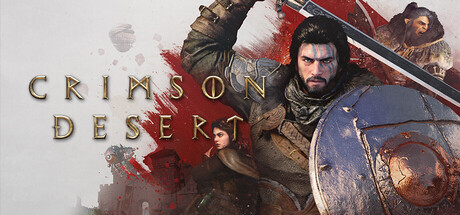
When a game manages to sell 4 million copies in less than two weeks, you have to wonder: what sorcery is this? Is it witchcraft? Divine intervention? Or perhaps just a really, really good game? In the case of Crimson Desert, it appears to be the latter. Pearl Abyss's ambitious open-world RPG has stormed the gaming landscape since its March 19, 2026 launch, proving that players are absolutely starving for quality experiences that don't treat them like walking wallets.

The Numbers Don't Lie (Even If Marketing Sometimes Does)
Let's break down this meteoric rise, shall we? The game achieved something most developers can only dream about during their third espresso of the morning:
| Milestone | Timeframe | Copies Sold |
|---|---|---|
| Launch Day Peak | First 24 hours | 2 million |
| Current Total | 12 days | 4 million+ |
| Growth Rate | Daily Average | ~333,000 copies |
These aren't just impressive numbers—they're downright absurd. In an era where many AAA titles struggle to maintain momentum past week one, Crimson Desert has essentially doubled its player base while maintaining consistent sales velocity. The question isn't whether this game is successful anymore; it's whether Pearl Abyss has enough champagne in their office to celebrate properly.
What Makes Players Actually Want to Play?
Here's the thing about massive open-world games: they're a dime a dozen these days. Every studio with a halfway decent budget seems to think that slapping together a huge map and calling it "content" will satisfy players. Spoiler alert—it doesn't. So what makes Crimson Desert different? Why are millions of players willingly diving into the continent of Pywel instead of scrolling through their backlog of shame?
Combat That Actually Respects Your Intelligence 🗡️
The combat system in Crimson Desert doesn't hold your hand like an overprotective parent at a playground. Instead, it trusts you to learn, adapt, and occasionally get absolutely wrecked by a bandit captain who clearly didn't get the memo that you're supposed to be the hero. Every swing feels weighty, every dodge matters, and positioning isn't just a suggestion—it's survival.
Unlike those games where you can button-mash your way to victory while simultaneously ordering pizza and filing your taxes, Crimson Desert demands your attention. The physics-based combat means that environmental factors actually matter. Fighting on a steep slope? Good luck maintaining your balance. Trying to swing a massive war hammer in a narrow corridor? That's going to be a problem.
A World That Doesn't Feel Like a Theme Park 🌍
Remember those open-world games where NPCs stand in the same spot for all eternity, repeating the same three voice lines like broken automatons? Crimson Desert said "not on our watch." The AI in this game actually responds to your presence in ways that make the world feel genuinely alive.
Wander into a village during a storm, and you'll find residents actually seeking shelter rather than standing there like sentient mannequins. Clear out a bandit camp, and the surrounding area becomes safer—at least until a new threat moves in. The world doesn't wait for you to activate it; it exists and evolves whether you're there or not.
The Story of Kliff and the Greymanes: Grit Meets Fantasy ⚔️
At the heart of Crimson Desert beats the story of Kliff and his mercenary band, the Greymanes. Now, you might be thinking: "Oh great, another chosen one narrative where a reluctant hero discovers they're special." But here's where the game surprises you—Kliff isn't special. He's not the chosen one. He's just a guy trying to survive in a brutal world where magic exists, but so does starvation, disease, and political corruption.
The narrative manages to feel grounded despite featuring dragons, ancient ruins, and enough magical artifacts to stock a museum. How does it pull this off? By focusing on human (and occasionally non-human) motivations that make sense. People aren't evil because the plot demands a villain; they're desperate, ambitious, or simply trying to protect what's theirs.
Key Narrative Strengths:
-
Character Development: The Greymanes aren't just quest-dispensing NPCs; they're fully realized characters with their own arcs, conflicts, and growth
-
Moral Complexity: Choices rarely break down into simple good vs. evil dichotomies
-
World-Building: The lore feels organic rather than exposition-dumped through endless text scrolls
-
Pacing: The main storyline knows when to accelerate and when to let you breathe
Technical Excellence (Yes, Really) 🖥️
Let's address the elephant in the room: modern AAA game launches are often absolute disasters. We've all been there—excited for a new release, only to encounter game-breaking bugs, performance issues that would make a potato PC weep, and day-one patches larger than some indie games.
Crimson Desert launched with issues, sure, but here's the shocking part: Pearl Abyss actually fixed them quickly. Revolutionary concept, right? Within days of launch, performance patches addressed most of the early hitches, resulting in one of the most stable open-world launches in recent memory.
Technical Specifications That Actually Work:
Recommended Settings (1080p, High Settings):

- GPU: RTX 4060 / RX 7600

- CPU: Intel i5-13400 / Ryzen 5 7600

- RAM: 16GB

- Storage: 80GB SSD

- Average FPS: 60-75
The optimization isn't just adequate—it's genuinely impressive for a game of this scale. Players report smooth performance even in densely populated areas, which is practically witchcraft considering some open-world titles still chug along at 30fps in similar situations.
Content That Justifies Your Time Investment ⏰
In 2026, asking players to commit dozens of hours to a single game is a bold move. We live in an era of infinite entertainment options, where your competition isn't just other games—it's streaming services, social media, and that growing stack of books you promised yourself you'd read.
Crimson Desert understands this and responds with an almost overwhelming amount of content:
-
Main Quest Line: 40-50 hours of core narrative
-
Side Quests: 100+ hours of optional content that actually matters
-
Exploration: Countless secrets, hidden areas, and environmental storytelling
-
Combat Challenges: Optional boss encounters that will test everything you've learned
-
Crafting and Progression: Deep systems that reward experimentation
The beauty here is that none of it feels like padding. Every quest serves a purpose, whether it's developing characters, expanding the world, or providing meaningful gameplay challenges. There's no "collect 50 bear asses" busywork designed solely to artificially extend playtime.
The Price Question: To Pay or Not to Pay? 💰
At the official price of $69.99, Crimson Desert sits at the standard AAA pricing tier. Is it worth it? If you're someone who values hundreds of hours of quality content, absolutely. That breaks down to less than a dollar per hour of entertainment—cheaper than most hobbies that don't involve staring at screens.
However, savvy shoppers know that the retail price isn't always the best price. Verified third-party sellers often offer legitimate keys in the $59 range, providing a solid discount without resorting to sketchy grey-market sites. Just remember: if a deal seems too good to be true, it probably involves stolen credit cards and a potential ban from your favorite gaming platform.
What You Get for Your Money:
✅ Complete base game with all launch content
✅ Regular post-launch patches and improvements
✅ No predatory microtransactions
✅ No always-online requirement for single-player
✅ Actual customer support that responds
Why This Success Matters for Gaming 🎮
The 4 million sales milestone isn't just a win for Pearl Abyss—it's a statement to the entire industry. Players are willing to pay premium prices for premium experiences. They'll support developers who prioritize gameplay over monetization schemes. They'll embrace ambitious projects that respect their time and intelligence.
What does this mean for future game development? Hopefully, it signals a shift away from the live-service, battle-pass, season-content treadmill that has dominated AAA gaming for the past several years. Games don't need to be "forever games" to succeed. They just need to be good games.
Industry Implications:
-
Single-Player Viability: Proves massive budgets can succeed without multiplayer components
-
Launch Quality: Demonstrates that relatively stable launches build positive word-of-mouth
-
Content Over Services: Shows players value complete experiences over endless content drip
-
Regional Success: Strong performance across multiple markets indicates universal appeal
The Verdict: Hype Justified? 🏆
When 4 million players independently decide to spend their hard-earned money on the same game within two weeks, they're collectively making a statement. In this case, that statement is clear: Crimson Desert delivers on its promises.
Is it perfect? Of course not. No game is. But it represents something increasingly rare in modern gaming—an ambitious vision executed with competence and respect for the player's experience. Pearl Abyss set out to create a massive open-world RPG with meaningful combat, engaging storytelling, and a world worth exploring. Against all odds in an industry littered with disappointments, they actually pulled it off.
The continent of Pywel awaits, and judging by the sales numbers, millions are already exploring its secrets. The only question left is: will you join them? Or will you wait for the inevitable Game of the Year edition while everyone else is already deep in their second playthrough? 😎
Crimson Desert isn't just another open-world game. It's a reminder of what AAA gaming can achieve when ambition meets execution, when developers trust their audience, and when the focus remains on creating something genuinely worth playing. In a market saturated with mediocrity and monetization, that alone makes it worth celebrating.
Games Mentioned
Related Articles

Reclaiming What Was Lost: My Journey Through Pywel's Transformation
news
Monster Hunter Rise: Sunbreak Hits 10 Million Sales Milestone
news
Ghostrunner 2 Launches Across All Platforms with Epic Savings
news
One Piece Odyssey: Epic 25th Anniversary JRPG Adventure
news